
Why India? Why Now?
- India is currently the world’s fastest-growing esports market, with a projected 26-28% CAGR (Compound Annual Growth Rate) through 2030.
- Convergence of 5G infrastructure, ultra-low data costs, and a “Mobile-First” culture.
- Regulatory clarity following the Promotion and Regulation of Online Gaming Act (2025) has de- risked the sector for institutional capital.
A Multi-Billion Dollar Trajectory
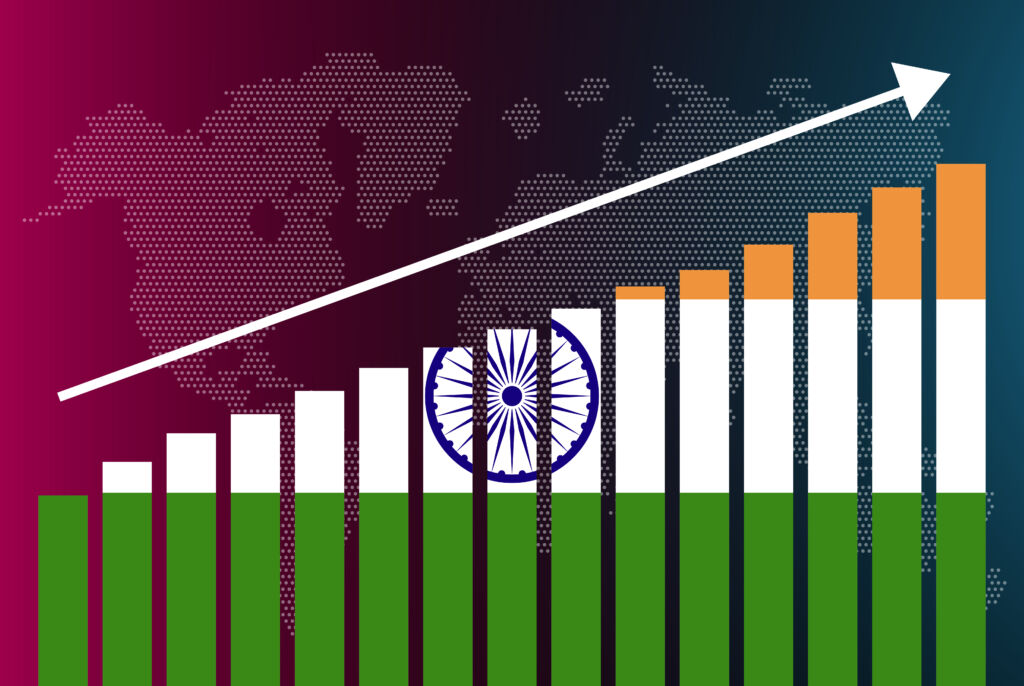
- Indian gaming market valuation: $5.91 Billion (2025), projected to hit $16.72 Billion by 2034.
- Esports-specific revenue is tripling, driven by media rights and high-value sponsorships.
- India accounts for nearly 25% of the global interactive entertainment user base.
Democratizing Professional Play
- 90% of Indian gaming revenue comes from mobile devices—higher than the US or China.
- Over 1 Billion smartphone users expected by the end of 2026.
- The “Jio Effect”: Affordable 5G has slashed latency to below 20ms, enabling competitive-grade play on budget devices.
Capturing the Gen Z & Alpha Attention Economy
- 75% of gamers are adults with rising disposable income; 40% are in the high-intent 15–24 age bracket.
- Tier 2 and Tier 3 cities are emerging as the new talent hubs, representing untapped “Middle India” markets.
- Rising female participation (growing at 15.4% CAGR), diversifying the audience.
Beyond the Prize Pool: Multi-Channel Monetization
- Sponsorships (43% share): Massive entry of non-endemic brands (Hyundai, LG, Red Bull).
- Media Rights: The fastest-growing segment as OTT and streaming platforms bid for exclusive tournament coverage.
- In-Game Economy: UPI-integrated microtransactions are the primary revenue driver (63% of total gaming share).
A Robust Professional Value Chain
- Organizers: Industry leaders like Nodwin Gaming and Skyesports.
- Platforms: YouTube Gaming and Twitch dominance, supplemented by local cloud gaming initiatives (Reliance Jio Games).
- Infrastructure: The rise of “Esports Arenas” (e.g., ApeCity in Navi Mumbai) providing professional training grounds.
From Gray Market to National Sport
- Government recognition: Esports now categorized as a “multi-sport discipline” under the Ministry of Youth Affairs and Sports.
- PROGA 2025: Clear distinction between “Games of Skill” (Esports) and “Games of Chance” (Gambling).
- Inclusion in international stages (Asian Games, Olympics) has unlocked state-level funding and incentives.
The Next Frontier: Platform-Agnostic Play
- Cloud Gaming: Removing hardware barriers; players can stream AAA titles on $150 phones via the cloud.
- AI Integration: AI-driven coaching, real-time analytics for broadcasters, and personalized fan engagement.
- Vernacular Content: Growth of games in Hindi, Tamil, and Telugu to capture regional markets.
Navigating the High-Growth Landscape
- Risk: High dependence on a few titles (BGMI/Free Fire). Mitigation: Diversification into PC/Console and indigenous IP.
- Risk: Talent crunch in game dev. Mitigation: Government AVGC (Animation, Visual Effects, Gaming, and Comics) task force funding.
- Risk: Player burnout. Mitigation: Professionalization of team management and mental health support.
Partnering for the Future of Indian Sport
Summary of the $10B+ upside by 2031.
Opportunity for early-stage entry into infrastructure, team ownership, and tech-stack development.
"India isn't just playing the game; we are building the arena."
Fast Thumbs vs. Fast Minds: Future-Proofing the Next Era of Esports
- Existing esports companies and leagues primarily utilize traditional controllers or mobile interfaces. These platforms only require navigation skills, which develop limited cognitive behaviors. Essentially, players are restricted to a screen and are simply practicing fast response times—a habit that will eventually decline as they age.
- Gaming shouldn’t just be about fast thumbs; it should be about a fast mind. Today’s esports leagues are limited by traditional ‘button-mashing’ interfaces that focus on short-term reaction speed rather than long-term brain health. These screen-based habits have an expiration date. We are championing a new era of esports that moves beyond simple navigation to build deeper, sustainable cognitive skills that stay with a player for life—not just until their reflexes slow down.
- Esports is rapidly emerging as a critical, future-oriented skill set, moving beyond entertainment to foster essential 21st-century capabilities like strategic thinking, teamwork, and high-speed decision-making. As a multi-billion dollar industry, it offers career pathways in gaming, management, and technology. These skills are increasingly valued by employers, building digital fluency, resilience, and complex problem-solving abilities.